Got a question?

Administration
The Global Wind Energy Council (GWEC) partners with the World Bank each year on a series of study tours to energy hubs. One recent stop was Port Esbjerg, where a delegation came to learn from Denmark’s experience with offshore wind and grids.
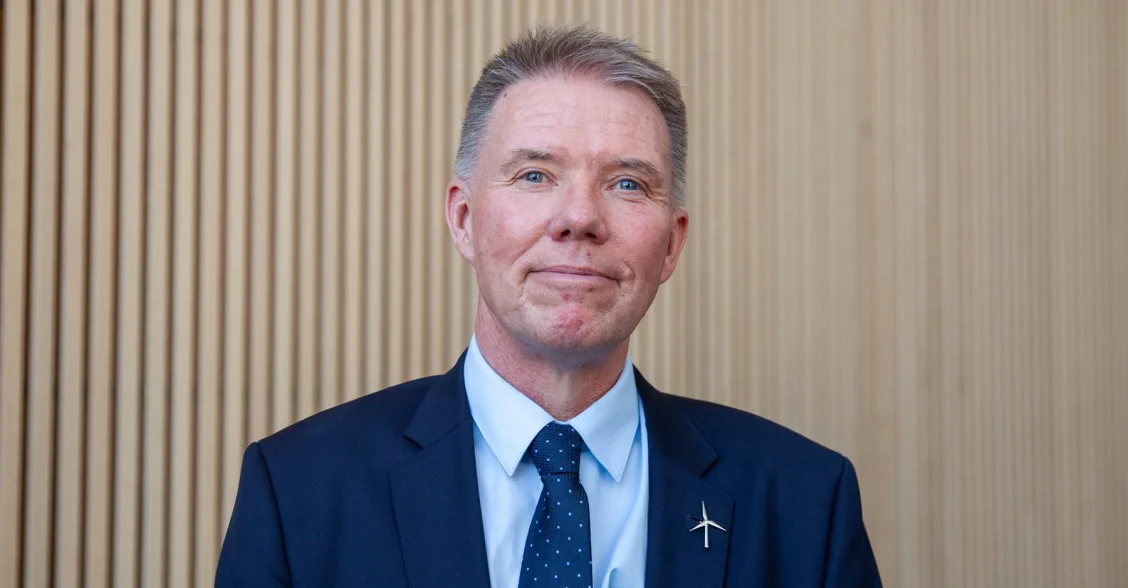
Stewart Mullin, Chief Industry Officer at GWEC, points to Port Esbjerg as an important example for countries looking to develop offshore wind at scale.
He sees the visit as an opportunity to share Denmark’s experience with countries that are preparing to scale up offshore wind and renewable energy.
“The focus is not simply on wind turbines, but on how large-scale offshore wind affects the wider electricity system,” says Stewart Mullin.
“We have several countries that want to get started with wind power at scale. It is important for them to understand how you bring that energy into the infrastructure in the best possible way.”
Why is Port Esbjerg an important example?
“You should understand that Port Esbjerg is a unicorn port. Everyone wants to understand how a port can develop so much and always seem to be one step ahead,” says Stewart Mullin, pointing to the port’s transformation from fishing and oil and gas to offshore wind.
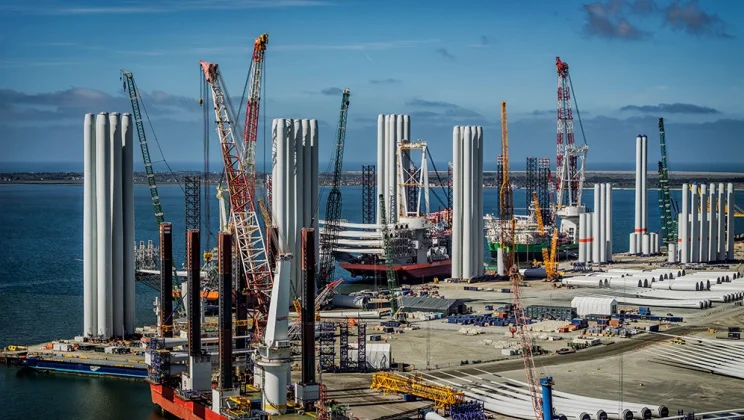
Photo: Robert Attermann, RED STAR 2.0
“I think it is impressive. When we have people coming to Denmark, Port Esbjerg is always the first stop on the tour. We have been lucky enough to see control rooms and hear from electricity companies and others. But just coming into Port Esbjerg, then you can see the scale of it. You suddenly feel that you are part of a huge industry. It is a real eye-opener.”
The Danish way
Stewart Mullin also highlights that the Danish experience provides practical lessons and that the country has operated with large amounts of wind power for many years.
“The good thing about wind power is that you know with a high degree of certainty what is going to happen tomorrow. However, the participants need to understand what the plan is - if there is not going to be any wind tomorrow at 11 o’clock, for example. What is the backup plan? The Danes have a lot of experience with this,” says Stewart Mullin.
He highlights the development from the earlier generations of smaller turbines to today’s much larger machines.
What else can countries learn from Denmark?
“The central question is how to balance electricity supply and demand when renewable generation varies. If you have Horns Reef 1, 2 and 3 – which many people see as a kind of godfather of wind farms around the world – what do you do with the extra electricity when there is a lot of wind? Can you store it in batteries? The opposite question is equally important: what happens when the wind is not blowing or the sun is not shining,” says Stewart Mullin. He adds:
“The main purpose is to give them a system perspective on renewables. Offshore wind is part of their energy mix, but when you are talking about offshore wind at gigawatt scale, it is a completely different discussion. You need to understand system design, where the money comes from, the route to market - and what happens if there is excess capacity.”
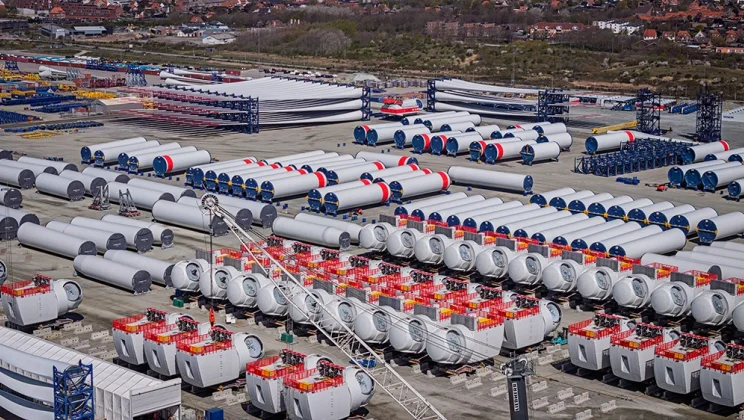
Photo: Robert Attermann, RED STAR 2.0
The World Bank delegation included grid specialists and participants connected to emerging markets, including Vietnam. Other countries looking at offshore wind include the Philippines, Brazil, Mexico, Colombia, Turkey and Morocco.
What is the wider global opportunity?
“The lesson from Denmark is also about cooperation between countries. How can we do this as a region instead of as individual countries? Can Denmark provide energy to Germany, Norway and Sweden? And if you think about Asia, could electricity from Vietnam eventually reach Singapore? This requires grids and interconnections to develop alongside renewable generation.”
Mullin points out that in many countries, grid development is lagging behind the expansion of renewable generation.
“The way Denmark has tackled this, and the fact that you can actually come and see it, gives you a really good idea of what they need to do within their own countries. For the visiting countries, Port Esbjerg therefore offers more than an example of a successful offshore wind port. It provides a practical demonstration of how wind power, ports, electricity infrastructure and regional cooperation can work together as part of a larger energy system.”
Go to overview