Got a question?

Administration
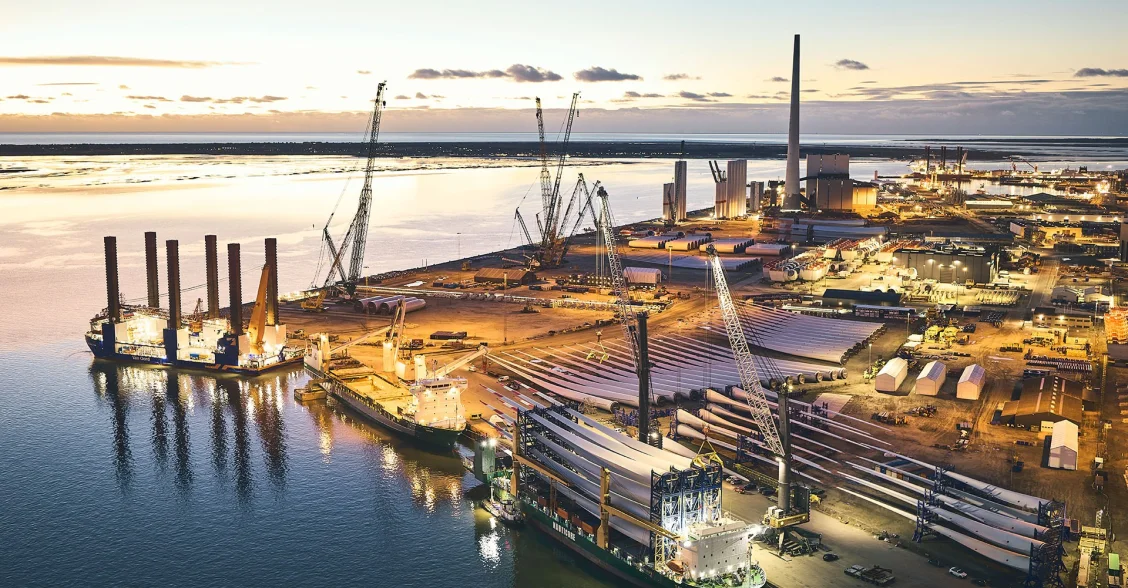
The rapid expansion of energy infrastructure in the North Sea has made ports like Esbjerg central hubs in Europe’s energy system. At the same time, however, it has significantly increased vulnerability. Today, the seabed is covered by a network of cables and pipelines that are critical to both energy supply and the economy – and difficult to protect.
“Put simply, the North Sea is full of cables, which makes us particularly exposed to attacks.”
This is how CEO of Port Esbjerg, Dennis Jul Pedersen, describes the situation.
The concentration of critical infrastructure makes the situation in the North Sea complex. At the same time, ownership and responsibility are spread across private actors, states, and international organisations – making it difficult to maintain a clear overview.
Add to this that around 80 percent of all goods are transported by sea – and the consequences of attacks or disruptions to activities at a port like Esbjerg can be significant. That is why Dennis Jul Pedersen is calling for new forums for knowledge sharing – forums that include ports. He is also calling for a comprehensive national preparedness framework.
“The big question is who is responsible,” he says.
Maritime security
A wide range of issues fall under maritime security. These include sabotage and hybrid threats to offshore energy infrastructure such as cables, pipelines, and wind farms.
They also include cyberattacks on ports, energy systems, and digital control systems, as well as surveillance and intelligence gathering by vessels from hostile states. In addition, there are security concerns related to port operations and ship traffic near energy installations and critical infrastructure.
To address all these aspects, coordination between countries – and not least within countries in terms of monitoring, preparedness, and protection of maritime areas – is essential.
A source of knowledge
A key point is that ports themselves hold observations and experience that can be crucial in understanding the risk landscape.
“Ports can often tell you a great deal,” says Dennis Jul Pedersen, adding:
“Ports handle large volumes of vessel traffic every day and therefore have unique insight into patterns and anomalies. For example, we observe the so-called Russian shadow fleet, where vessels operate outside normal control mechanisms. Last year, we denied access to a vessel that then sailed directly to Russia. Here, both ports and pilots can play a key role in identifying suspicious behaviour – but only if observations are collected and shared systematically.”
International cooperation
Security in the North Sea was also a topic discussed during the North Sea Energy Cooperation (NSEC) meeting in Hamburg in January 2026, where ministers, officials, and business leaders met to strengthen cooperation on Europe’s offshore energy.
In addition to energy, there was a focus on the role of ports as critical infrastructure – and the need for increased international collaboration.
The threat to critical infrastructure is also evolving alongside new technologies and new actors. This places entirely new demands on how security is managed.
“It is not enough to protect what we have today – tomorrow we will see new technologies. This applies, for example, to both aerial drones and underwater drones, and we must be prepared for that,” says Dennis Jul Pedersen.
Calls for information sharing
Increasingly, security is about knowledge, coordination, and the ability to respond quickly to changes in the threat landscape. However, according to Dennis Jul Pedersen, Denmark is not yet sufficiently prepared.
“We need to discuss how we share information. If someone has knowledge and does not share it with relevant parties, we are weaker,” he says, adding:
“Today, information flows are often fragmented between authorities, intelligence services, and private actors. This means that critical knowledge is not necessarily shared across organisations, even when it could be decisive. There is a need for more structured knowledge sharing, where relevant actors have access to the necessary information – without compromising security by sharing everything with everyone.”
Need for a maritime security forum
Specifically, the port CEO points to the need for a joint maritime forum where relevant actors can share information and build a common situational awareness.
“A maritime forum for total security, where pilots, ports, police, intelligence services, and owners of critical infrastructure sit together – that could be a way forward,” says Dennis Jul Pedersen.
“The aim is to create a more agile system where information can quickly be translated into action. Today, it can take a long time to access relevant information, and that does not match a threat landscape that changes from day to day. At the same time, such a forum could strengthen the decision-making basis for both authorities and policymakers.”
Inspiration from abroad and NATO
One of the key challenges in security is that it is not always clear what constitutes a real threat.
“What is suspicious? That is constantly changing. It requires ongoing dialogue and continuous updating of shared understanding,” says Dennis Jul Pedersen, noting that some incidents might have been prevented if information had been shared in time.
“It might have been possible to prevent the Nord Stream attack if someone had seen the equipment and reported it,” he says.
Other countries have already gained experience with closer collaboration across authorities and sectors. The Netherlands and Belgium are highlighted as examples of countries that have developed effective cooperation models – partly as a result of challenges related to drug trafficking.
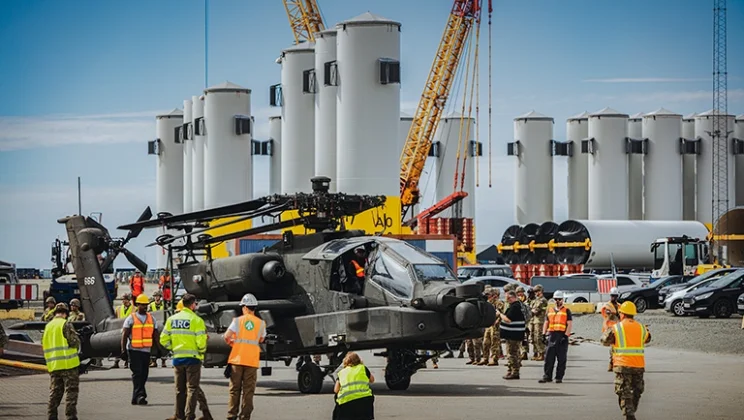
Another example can be found in cooperation around NATO port calls, where information sharing and planning function effectively across actors.
“When NATO calls at port, information is shared – and it works very well,” says Dennis Jul Pedersen.
Planning for NATO port calls often begins months in advance, and the level of security is significantly higher than in day-to-day operations. According to the port CEO, there is potential to transfer some of these practices to everyday operations.
A more integrated approach to security
Overall, developments point to a need to rethink how security around critical infrastructure is managed. Current frameworks and regulations are largely designed for a different era and do not fully address the complex and dynamic threats that ports face today.
According to Dennis Jul Pedersen, it ultimately comes down to creating a more coherent and proactive approach, where knowledge, collaboration, and rapid action go hand in hand.
“The more information you have, the better prepared you can be,” he concludes.
Go to overview