Got a question?

Administration
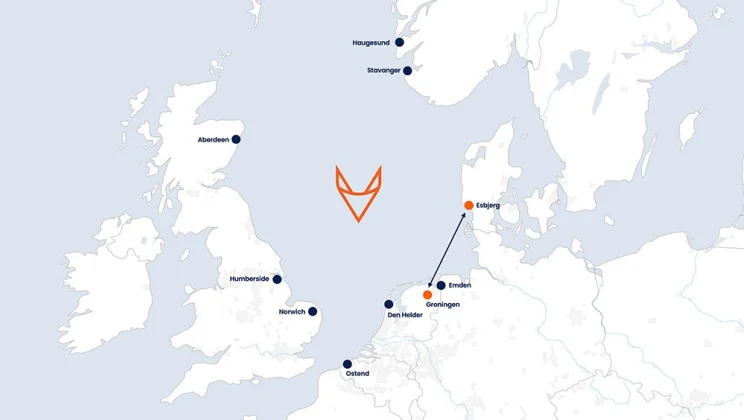
A new regional air network linking Esbjerg, Groningen, Den Helder and Norwich is set to launch this August, promising faster connections between some of the North Sea region’s most important energy and offshore centres. The Esbjerg–Stavanger route is expected to launch in Q4 2026.
Behind the initiative is LYGG, a company that describes itself not as an airline, but as a mobility platform designed to solve a challenge that has long frustrated businesses operating across Northern Europe: the lack of efficient transport links between smaller cities.
According to founder and CEO Roope Kekäläinen, the company expects demand to grow gradually as awareness of the new connections increases.
“We are targeting around 500 passengers per month from Esbjerg. We will start at a lower level and scale up over time,” Roope Kekäläinen says. He explains:
“I founded LYGG because I saw a problem in the market. I previously built a charter broker company, which I sold in 2020. Throughout my career, I have worked with destinations and regional connectivity, and I could see that the existing model simply does not work for smaller cities.”
Strengthening Port Esbjerg’s position
For Port Esbjerg, the new network is about more than improved connectivity. It strengthens the port’s position as a hub for offshore wind, energy and maritime industries by making it easier for companies and specialists to move efficiently across the North Sea region.
As international collaboration becomes increasingly important, efficient regional air connections can help support business development, attract investment and reinforce Esbjerg’s role as one of Northern Europe’s leading energy hubs.
In that sense, mobility is becoming an increasingly important part of the infrastructure that enables the green transition.
A demand-driven business case
The launch of the Esbjerg–Groningen–Den Helder–Norwich route marks the next step in what LYGG hopes will become a broader North Sea network connecting key industrial regions around the North Sea.
While most aviation companies focus on maximizing passenger volumes and filling aircraft seats, LYGG has built its business model around corporate demand.
LYGG works by aggregating travel needs from businesses and matching that demand with regional aircraft operators. Instead of trying to compete with major airlines, the ambition is to create direct connections where traditional carriers see insufficient passenger volumes.
“By not being an airline in the traditional sense, we can solve the problem. Many smaller routes are waiting to be served, and we focus on corporate customers rather than individual travellers. By pooling demand from companies, we can create sustainable routes where there is a real business need,” Roope Kekäläinen says.
The model is particularly relevant for regions where business activity is concentrated within specialised industries, but where passenger numbers are too low to sustain conventional scheduled services.
“Our model is demand driven. We do not start with an aircraft and then try to fill it. We start with demand and build the operation around that.”
Driven by North Sea industries
The North Sea region was selected as the first focus area because of its concentration of offshore, maritime and energy-related activities.
The route network links several cities that play important roles in the offshore wind, oil and gas, logistics and renewable energy sectors.
“Our key sectors are wind, oil and gas. Much of the demand comes from activity in the North Sea. These industries depend on people moving quickly between locations, but today many journeys are surprisingly difficult despite the short distances involved,” Roope Kekäläinen says.
Esbjerg occupies a central position in that strategy. Over the past decades, Port Esbjerg has developed into one of Europe’s leading offshore wind hubs while maintaining a strong position within traditional offshore energy.
“Esbjerg is a remarkable harbour with extensive capabilities to support offshore projects. That is why many of our largest clients are based there and why direct connections to Groningen make sense,” Roope Kekäläinen explains.
“Major companies in Esbjerg, alongside a large network of subcontractors, operate internationally and need efficient access to partners, projects and customers throughout the North Sea region,” he adds.
Faster journeys
A central argument behind the concept is that many business travellers currently spend significant amounts of time travelling through major hubs such as Amsterdam Schiphol.
For a traveller moving between regional destinations, a relatively short geographical distance can easily become a full day of travel.
According to the LYGG’s own calculations, a return trip between Esbjerg and Stavanger can be reduced from around 21 hours of total travel time to approximately four and a half hours using direct regional connections. The company also estimates lower travel costs and substantially reduced CO₂ emissions.
For companies operating projects across several countries, the ability to travel out and back on the same day can significantly improve workforce efficiency and reduce accommodation costs.
LYGG builds routes around what it describes as anchor customers.
“Groningen–Norwich is a good example. We build operations around a baseline demand from anchor customers and then add other companies. This allows us to scale capacity up and down throughout the year while always having an elite client base behind the route.”
Expansion plans
LYGG is planning additional destinations and expects Stavanger to become the next route in the network, Roope Kekäläinen explains:
“We are planning to add Stavanger in the fourth quarter of this year. Stavanger is a natural extension of the network because it shares many of the same industries and business travel patterns as Esbjerg and the other destinations.”
Longer-term, the company envisions a much larger regional network linking underserved business centres throughout Northern Europe.
The ambition is to establish around 20 destinations by the end of 2027, including locations in Norway, Germany and Poland, as well as other strategic regional markets.
For Esbjerg, the new route represents not only a transport link but also a stronger connection to some of the most important business centres in the North Sea.
As renewable energy and maritime industries continue to expand, efficient regional connectivity may become an increasingly important competitive advantage.
In the years ahead, the ability to connect people, projects and expertise quickly across the region may prove just as important as physical infrastructure. For a port built around international industries, stronger regional links can help support continued growth and reinforce Esbjerg’s role as a gateway to the North Sea energy sector.
Go to overview