Got a question?

Administration
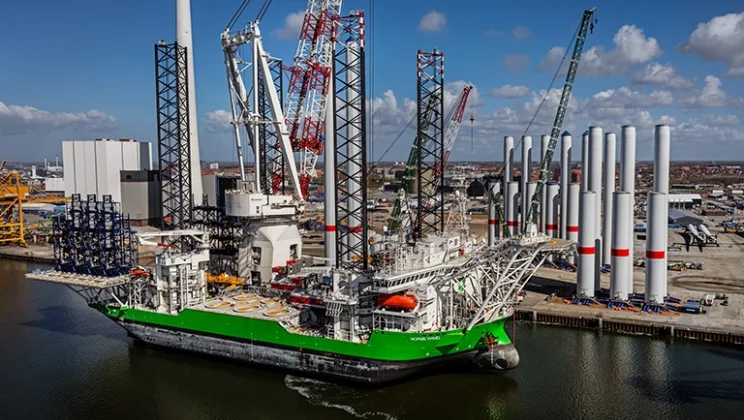
The world’s largest offshore wind installation vessel – DEME Group’s new Norse Wind – works closely with Port Esbjerg. Here, the captain shares insights into the challenges and advantages of navigating the giant in the North Sea.
Norse Wind was built at CIMC Raffles Shipyard in China and delivered in October 2025 to DEME Group, a global offshore operator.
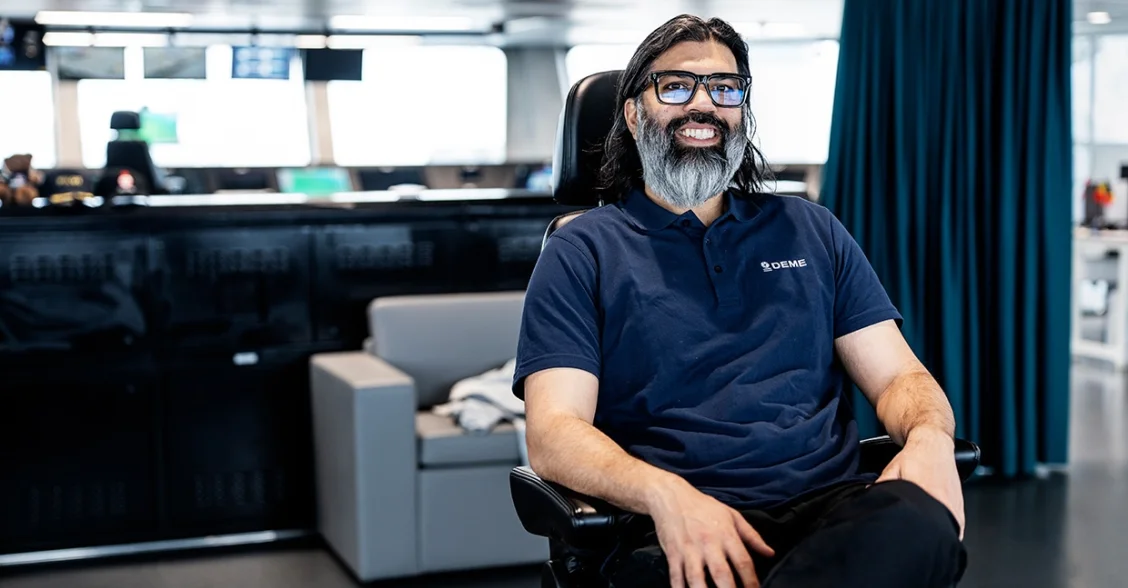
The vessel’s first assignment took place in the North Sea, with Port Esbjerg as its base. It quickly became central to the work of captain Mohsin Ali Khan, who has extensive experience with jack-up installation vessels.
Mohsin Ali Khan’s role spans from technical expertise to leading a complex organisation on board.
“It is my job to ensure that we operate within regulations, and we can have up to 120 people on board – so there is a great deal of responsibility,” he says.
Captain keeps a close eye on the weather
Norse Wind is part of a broader development in offshore wind, where vessels, ports, and forms of collaboration are adapting to larger and more complex projects.
In practice, it is the interaction between vessel, captain, and port that forms the basis for daily operations. Experience and cooperation are essential to completing projects safely and efficiently.
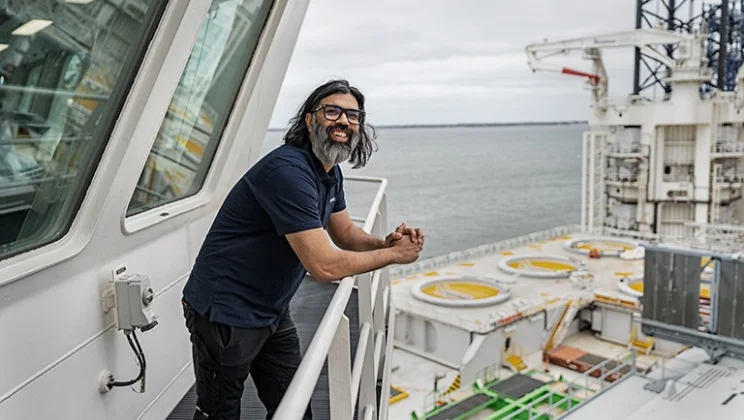
Despite its advanced technology, weather remains a governing factor. Mohsin Ali Khan explains how Norse Wind is affected by environmental conditions – particularly wind:
“Weather plays a major role. We are a large vessel with a significant wind-exposed area – there are towers and blades on board. It is a large surface area for the wind to act on.”
To manage this, Mohsin Ali Khan works with fixed limits and procedures that are continuously assessed throughout projects. Capacity is around 20 m/s, but many factors are considered.
“Each project has its own wind limits that we must adhere to,” he says, adding:
“We jack down to 70 metres and always have a specialist on board who helps ensure compliance. You always start very conservatively – so everything is fully under control. As you gain more experience on a project, you can gradually increase the limits.”
Collaboration across stakeholders
Work on board takes place in close cooperation with both clients and suppliers.
Norse Wind provides the platform, while installation is carried out by manufacturers such as Vestas and Siemens Gamesa.
Depending on the project, Norse Wind may be chartered directly by manufacturers – or by the end client, including energy companies such as Ørsted and INEOS.
“In the wind industry, there is strong collaboration between clients and vessels, and we do not feel pressure from headquarters. First and foremost, it is about safety,” says Mohsin Ali Khan.
Port Esbjerg is the preferred partner
In daily operations, Esbjerg plays a key role as more than just a port of call. Cooperation with the port’s stakeholders is an integrated part of operations.
Mohsin Ali Khan highlights the port’s extensive wind expertise.
“We experience the cooperation as very smooth – across the board. This applies to pilots, agents, and the port. It simply works. They are flexible and continuously support us, and if we need something extra, they always try to find a solution,” he says.
He particularly emphasises Esbjerg’s experience with jack-up vessels as crucial, noting that other ports may have less experience with this type of operation.
“We are a jack-up vessel, and we want to be able to jack up in port. But there are rules about how close you can get to the quay – as it could collapse. In Esbjerg, there is a strong understanding of this, which we do not experience everywhere. Many places do not fully understand jack-ups. Of course, there are places like Rotterdam and Cuxhaven – but our preferred port remains Esbjerg.”
Special conditions in the North Sea
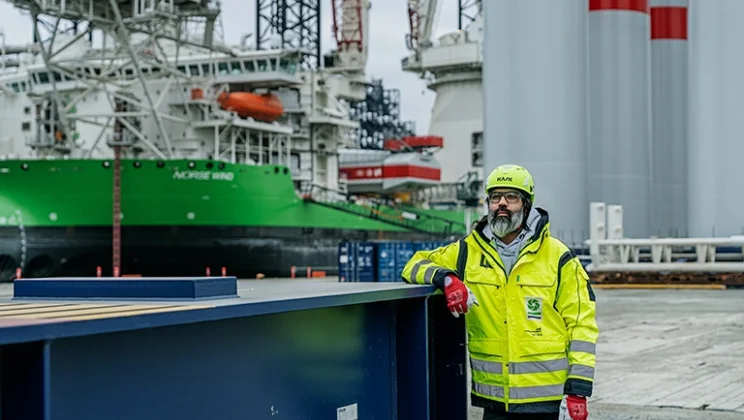
Norse Wind now primarily operates in the North Sea, where wave conditions and the sandy seabed have a significant impact on operations.
“In the North Sea, we aim to minimise weight, and we deal with shorter wave periods. Longer wave periods, as seen in more open seas, can cause significant movement,” the captain explains.
In other regions, Mohsin Ali Khan has worked with rocky seabeds.
“For example in France – and that presents different challenges,” he says, adding:
“The North Sea is currently one of the most developed regions for offshore wind, while new markets in Asia and the Mediterranean are still evolving. You can feel that difference.”
Go to overview