Got a question?

Administration
New trade corridors are creating opportunities to make greater use of Europe’s peripheral ports. But this requires close cooperation between shipping companies and ports – cooperation that is being actively developed in Port Esbjerg. Blue Water points to new routes.
Major ports such as Rotterdam, Hamburg, and Antwerp are essential in Europe, but smaller ports also play an important role. Regional hubs and strong connections strengthen the resilience of supply chains.
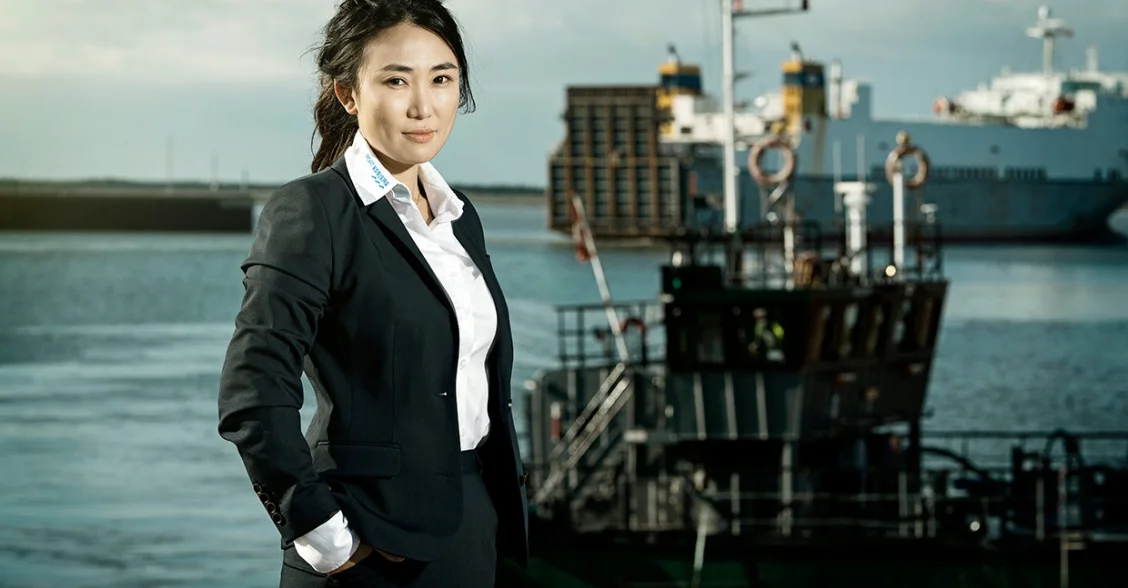
“It is about understanding your place in the overall network,” says Business Development Manager at Port Esbjerg, Tracy Jin.
This is where Esbjerg comes into the picture – as more than an offshore port. It is a strategy the port is actively pursuing, she explains.
“Esbjerg is strong within offshore wind, but overall, we are still a smaller port in Europe. That is why we have a clear focus on developing new business areas, alongside our core competencies,” says Tracy Jin.
A new division of roles
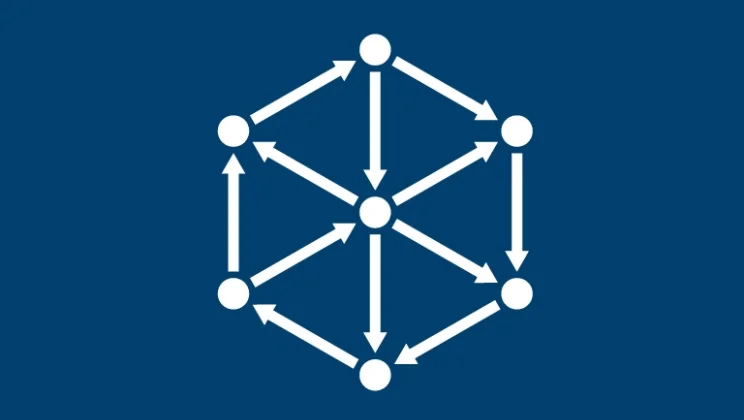
This is where the so-called hub-and-spoke model comes into play – a central axis with connections extending outwards, much like a bicycle wheel.
Large ports act as global hubs handling ocean-going vessels and large volumes, while smaller ports function as spokes, connected via short sea shipping, feeder services, rail, and road. This enables goods to move efficiently from global routes into regional markets.
A key advantage of the model is that it reduces congestion in major ports and brings goods closer to their final destinations.
“We are seeing a clear shift towards new trade routes between Europe and Asia. Nordic ports are increasingly acting as gateways to northern European markets. And we are seeing new direct connections – including to Esbjerg – to optimise supply chains,” says Tracy Jin.
However, the focus is not only on China, but also on ports in the United States, India, Korea, and Japan.
Over the past year, Port Esbjerg has established several partnerships with new ports in Asia. A key example is Ningbo Zhoushan Port, operated by Zhejiang Seaport Group – one of the world’s largest container ports.
Esbjerg’s advantages
Northern Europe north of Hamburg already plays an increasingly important role as a logistics hub. Ports are becoming more specialised – while trade between Europe and Asia continues to evolve and connect global supply chains more closely.
“In that context, Port Esbjerg is of interest to many,” says Tracy Jin, pointing to strong road and rail connections as well as access to both the North Sea and the Baltic Sea.
“Our location provides direct access to the North Sea and efficient connections to Scandinavia and northern Europe. Port Esbjerg is strong in logistics, the automotive sector, and project cargo. The port can function as part of a larger network, where goods from major hub ports are distributed onwards – particularly to the Baltics, Scandinavia, and Germany,” she explains.
Cars to Esbjerg – cold chain to Asia
The volume of cars – particularly Asian brands – is increasing, and several players are therefore exploring alternative logistics solutions into Europe. Congestion at major ports also plays a role.
Electric vehicles and renewable energy are also becoming increasingly important. Transport of wind turbine components from Asia to Esbjerg is already significant and is expected to grow further.
At the same time, there is potential for exporting products such as fish and seafood to Asia in refrigerated containers.
“China shows strong interest in Scandinavian products, but there is still a lack of export volumes back to China. Many ships return empty, and there is clear potential to establish a more efficient export corridor to China. This could be done through existing partnerships with major Chinese ports, and we are working with relevant players across the supply chain. But it requires both infrastructure and the necessary approvals,” says Tracy Jin.
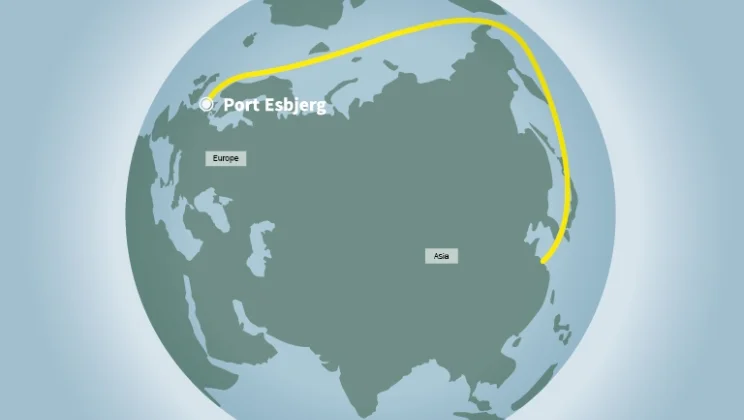
“Asia is also showing interest in Arctic routes. There have already been a few voyages via the Arctic from China to Europe – with significantly shorter transit times. This points to new opportunities going forward, and Port Esbjerg has an interesting position as a port located relatively far north,” she adds.
A completely new corridor
Claus Vendelbo Laursen is Regional Senior Vice President Nordics Energy, Ports & Projects at Blue Water Shipping. He points out that the China–Europe route is central to Blue Water, which handles a wide range of goods from China.
He also highlights that developments are moving towards new corridors – not least because traditional routes are becoming less viable.
“Before the pandemic, container trains ran from China via Kazakhstan and Russia. Due to the war in Ukraine, this route is no longer available,” he says, adding:
“When the pandemic hit, transit times increased due to bottlenecks in ports. Freight rates surged, and alternatives such as sea-air – combining sea and air transport – or air-sea were explored. That concept was widely used via Dubai, until the Iran conflict.”
The conflict involving the Houthis in the Red Sea – and the near closure of the Suez Canal – has also significantly contributed to longer transit times to Europe.
“Before the pandemic, it took five to six weeks from China to Europe. Now it often takes six to nine weeks. For us – and the market – supply chains have been under severe pressure,” says Claus Vendelbo Laursen. He adds:
“That is why Blue Water Shipping offers alternative corridors, including shipping to Los Angeles and flying goods onwards to Europe. But if it fits into a company’s supply chain, many choose to sail around southern Africa. Around 90 percent of volume goes that way. However, not everyone can accept up to an extra month in transit time. For time-sensitive goods, this is a major challenge.”
Focus on renewables
Claus Vendelbo Laursen notes that Blue Water is seeing increased activity in renewables to Esbjerg as part of the green transition.
“Everything within renewables is growing. Port Esbjerg is a key player both regionally and globally, and expectations for throughput are high. 2026 will be the year with the highest level of green activity at the port, and the volume of cargo arriving from Asia has never been greater,” he says.
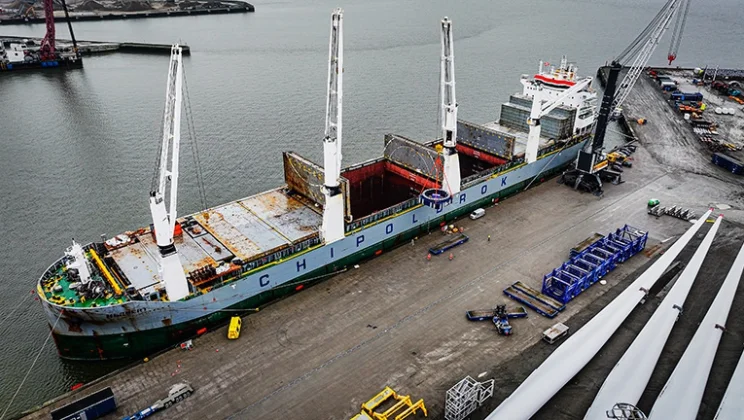
He also points out that developments related to the Iran conflict – and the risk of an oil crisis – could further boost renewable energy transport. Here, Port Esbjerg’s infrastructure is a clear advantage.
“Many other ports are historic ports with existing traffic and limited infrastructure for wind turbines. There are few locations with the necessary space – and here Esbjerg is well positioned, with relatively low establishment costs. We will see even greater investments, attracting even larger vessels. Ships are becoming bigger,” he says.
Northeast Passage in focus
Finally, Claus Vendelbo Laursen – like Tracy Jin – points out that Arctic routes could play a much larger role.
“If the Iran conflict had occurred three months later, when the Northeast Passage is almost open, far less cargo would have been flown via Los Angeles. Instead, ships would have gone north of Russia – typically between July and November,” he says, adding:
“The Northeast Passage creates opportunities where Esbjerg could be first in line. The connection to European infrastructure is crucial, and that is something that can be highlighted to Chinese partners. Port Esbjerg can position itself as an alternative.”
A further challenge in trade with China is the security dimension, where concerns exist around technological remote control and vulnerability.
“In terms of compliance, there are more questions regarding Chinese suppliers than European ones,” says Claus Vendelbo Laursen.
“This means we need to pay extra attention. Over the past five to eight years, however, Chinese companies have become more aligned with Western approaches to contracts. Previously, it was more difficult to accept Chinese contracts, but the level has improved significantly.”
Go to overview