Got a question?

Administration
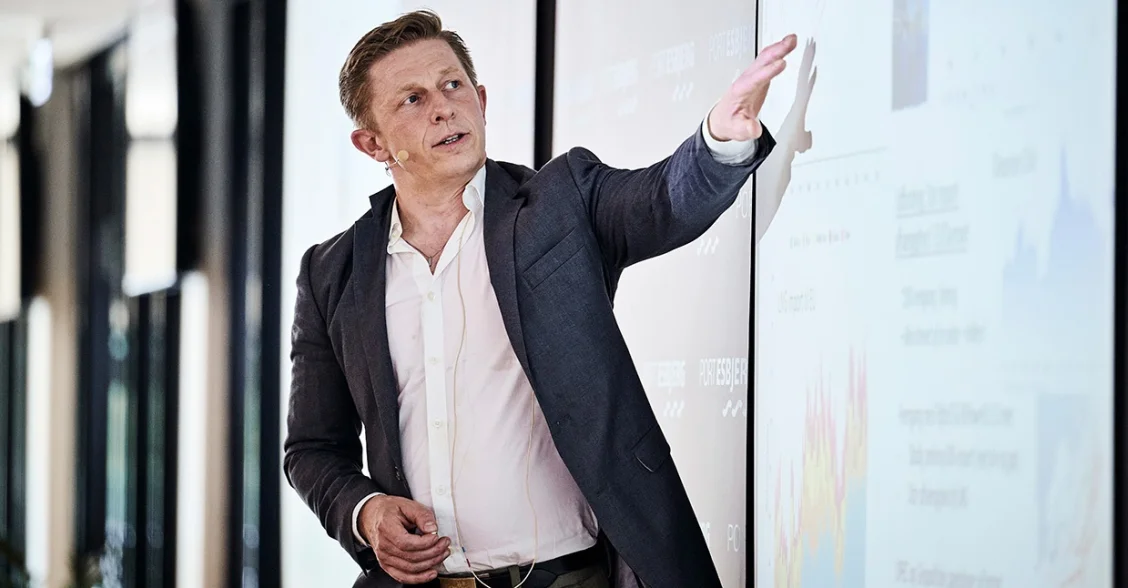
There are both geographical and strategic reasons why Esbjerg stands strong as an energy hub in both Denmark and Northern Europe, says Brian Vad Mathiesen, professor of energy planning.
If you followed the media a year and a half ago, you could easily have got the impression that the sun was setting on offshore wind, when Denmark's largest-ever offshore wind tender closed without a single application.
In May this year, the tone became far more positive, as new bids came in for offshore wind farms in both the North Sea and the Kattegat – tenders that are still being assessed by the Danish Energy Agency.
The same patterns appear at regular intervals when it comes to some of the new technologies under development, such as CCS – carbon capture and storage – and hydrogen. Tenders and funding pools come and go. Some succeed. Others don't. But progress continues.
According to one of Denmark's leading experts in energy systems, Professor Brian Vad Mathiesen of Aalborg University, it is important to understand that we cannot think of the green transition as a straight road without obstacles. There can be setbacks. But the path moves forward.
"We don't get any wiser if we imagine that there's only one way forward in the green transition – that nothing can go wrong. It's about getting better at understanding why things turn out differently than we expect," says Brian Vad Mathiesen, who stresses that there were some very specific things that went wrong when the 2024 tender failed. This was partly down to the terms and the timing.
"This won't be the first or the last time we see tenders that fail. The development is still in its early stages. And the question isn't whether we'll need a lot more electricity. The question is when and how. And offshore wind is part of the answer, if we look at the bigger picture," says Brian Vad Mathiesen.
Close to customers and the wind
And a bigger picture is not least about looking beyond our own borders. There's a strategic advantage in being located close to the markets.
"Port Esbjerg is extremely well placed compared with so many other ports. It has a good strategic location relative to buyers in Germany and the Netherlands, and in the areas where the potential is greatest," says Brian Vad Mathiesen, who estimates that a staggering 150 GW of offshore wind will be tendered across the whole North Sea over the next 20 years – with the Danish part of the North Sea making up only a small share of that potential. Denmark's current capacity is 2.7 GW of installed offshore wind today. That means the 150 GW Brian Vad Mathiesen refers to for the whole North Sea over the next 20 years is more than 55 times Denmark's total current offshore wind capacity.
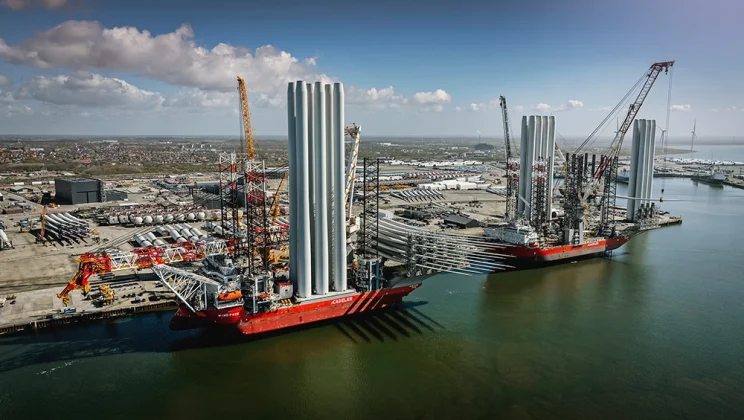
"The North Sea is absolutely crucial because of geographical and meteorological conditions. Given the plans we have across Europe, Denmark's role is to become a European powerhouse in energy production in Northern Europe. The Germans cannot supply all the energy they need themselves. The same goes for the Benelux countries. At the same time, the potential is enormous. Looking ahead to 2060, Denmark and Esbjerg are strategically positioned to help contribute to European security of supply, energy resilience and a climate-neutral future," says Brian Vad Mathiesen.
"There will always be a need for someone who can manage as big a systemic shift as the one we're in the middle of. Port Esbjerg is very well placed when it comes to offshore wind, hydrogen and CCS," says Brian Vad Mathiesen.
Shorter supply lines
Another advantage that comes naturally to Port Esbjerg speaks to another current issue: capacity problems in the electricity grid. Energinet, Denmark's transmission system operator, has recently announced that some projects could face waiting times of up to 10 years to be connected to the grid. This is a development we have only seen the beginning of, alongside broader electrification of society, more electric cars, more heat pumps and large data centres. And like other forms of traffic, capacity problems tend to cluster together – among other places around the major industrial centres in the Triangle Region or North Jutland, which have very energy-intensive industry.
According to Vad Mathiesen, it would make sense to move energy-intensive facilities closer to the energy sources. Those energy-intensive facilities could be in CCS or hydrogen – but could equally be many other energy-intensive industries.
"If the green transition isn't going to become very expensive, we can't keep expanding the grid as though the distance between producers and consumers of electricity doesn't matter. That's too costly and doesn't solve the problem. We're going to have to move large facilities closer to the energy source, so we don't end up with an oversized grid that sits idle much of the time," says Brian Vad Mathiesen, who has previously criticised Energinet and local electricity companies for not having the right structures in place. According to him, it has long been known that a boom in energy consumption was coming in this decade.
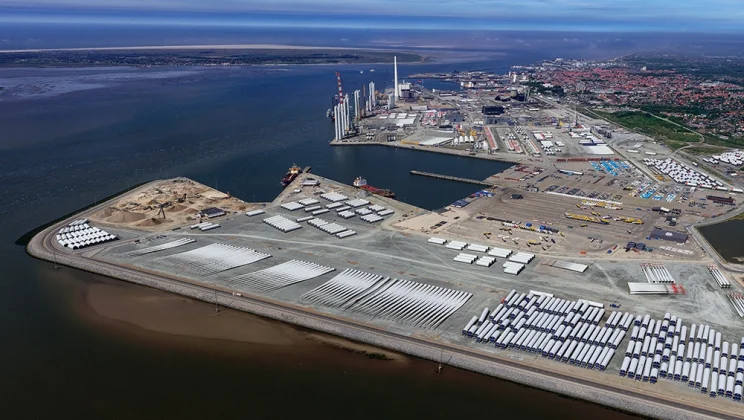
"Port Esbjerg has already made some major investments. Much of the infrastructure is in place, and there has been investment in both offshore wind and new technologies such as hydrogen and CCS. It's easy to imagine other industries arriving as well. That could be data centres, for instance, or any other big energy users. But you could also create other forms of symbiosis and material flows that depend heavily on energy. Port Esbjerg really does have a great many possibilities," says Brian Vad Mathiesen.
It depends on the political framework
Although it makes good sense to invest in new technologies under development, this too should not be mistaken for a straight road without obstacles. The technology is at an early stage of development, but more importantly, it's worth remembering that the development of hydrogen and CCS depends heavily on political winds. Political uncertainty around CCS became clear earlier in 2026, when German Chancellor Friedrich Merz questioned the entire emissions trading system and called for a revision or postponement. This could mean a temporary setback for CCS.
"There isn't a conventional market for carbon capture, but it's important to remember that it's necessary if we're to reach climate neutrality – not to mention becoming climate-negative, meaning removing more CO2 from the atmosphere than we emit," says Brian Vad Mathiesen, who notes that political winds can shift the other way just as quickly.
And precisely because it's difficult to predict the pace at which these new solutions will be rolled out and scaled up, he believes Port Esbjerg holds strong cards.
"The opportunities to act more agilely on the opportunities that arise are greater in Esbjerg, and you can perhaps take on bigger risks than elsewhere," he concludes.
Go to overview