Got a question?

Administration
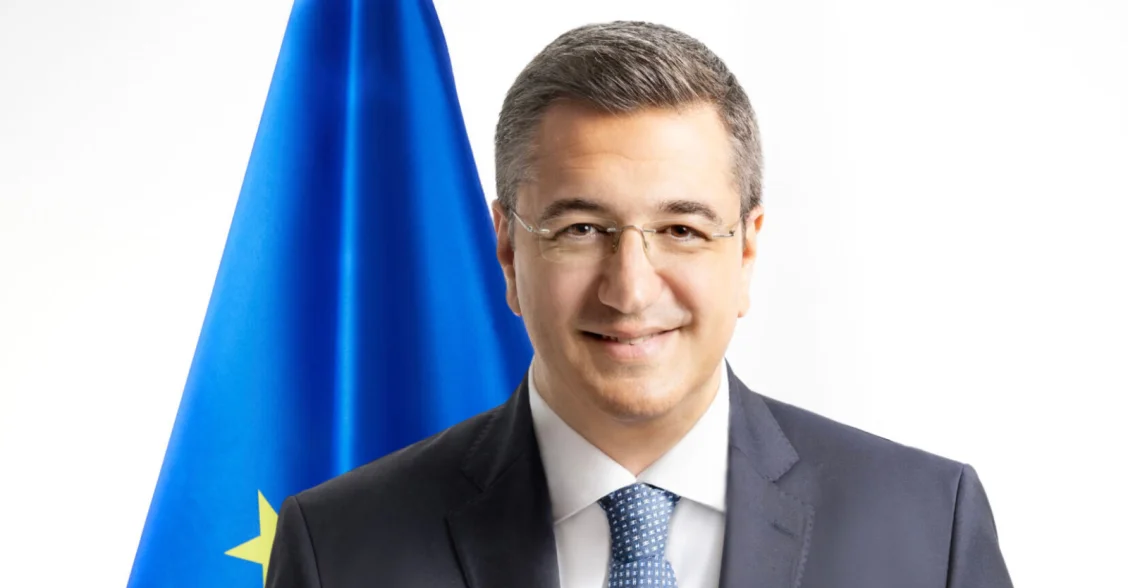
With the EU Ports Strategy nearing completion, EU Commissioner for Sustainable Transport and Tourism Apostolos Tzitzikostas leave little doubt about the direction ahead: “Strengthening port resilience and security is an EU priority.” In an interview with Port Esbjerg, he insists that “Ports should lead the transformation towards a cleaner, more efficient, and competitive Europe.”
Europe are navigating in a changing geopolitical environment and increasing pressure on supply chains. Supporting the long-term competitiveness of ports in terms with a focus on security, energy transition, and sustainability is at the heart of the upcoming EU Ports strategy.
In 2024, 2.2 million vessels entered the main EU ports. 814.3 million tonnes of goods were handled in the main EU ports alone in the first quarter of 2025. And 74% of goods entering or leaving the EU goes through ports by sea.
But with new possibilities, ports are not ‘just’ a matter of handling goods. Ports are crucial multimodal hubs for national, regional and global supply and export chains.
The importance of EU ports is underlined in the Draghi Report and the Commission Competitiveness Compass calls for a strategy to safeguard the vital role of ports for the future of the EU’s economy and update the policy structures.
Port Esbjerg talked with the EU Commissioner for Sustainable Transport and Tourism Apostolos Tzitzikostas on this matter, as the EU Ports Strategy are ending.
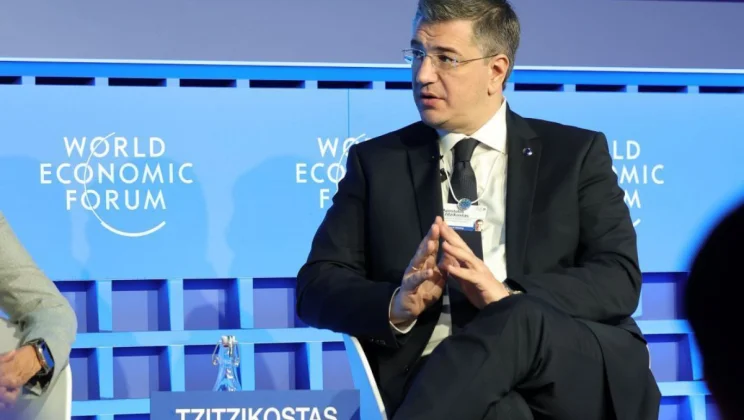
U Commissioner for Sustainable Transport and Tourism Apostolos Tzitzikostas
Security and resilience in a new geopolitical reality
Apostolos Tzitzikostas has served as EU Commissioner for Sustainable Transport and Tourism since 2024. From the outset of his mandate, he has focused on strengthening Europe’s transport systems as strategic enablers of competitiveness, security and resilience.
His work has centred on reinforcing critical infrastructure, accelerating the clean and digital transitions, and improving cross-border connectivity across the TEN T network. In today’s geopolitical climate, ports have moved to the centre of this agenda.
What do you see as the most pressing challenges currently facing Europe’s ports?
“The issue is the sheer number of challenges facing Europe’s ports. We are seeing heightened security risks, capacity and connectivity constraints, major investment requirements for the clean and digital transitions, complex permitting procedures, skills shortages and uneven implementation of EU rules.”
At the same time, he stresses that these challenges also create new opportunities, especially for ports being hubs for the energy transition:
“There are new business opportunities for Europe’s ports. Ultimately, this will increase the competitiveness and resilience of ports.”
When being critical infrastructure, ports are facing a growing number of hybrid threats and attacks; digital attacks from cyber criminals to physical threats such as drones and acts of sabotage. This is a key challenge to resolve for the Commissioner:
“Strengthening port resilience and security is an EU priority. We need better information sharing, closer cooperation between transport, customs and law enforcement authorities, and background checks for port workers. We also need to address risks related to ownership and foreign control of critical infrastructure.”
Ports need to embrace innovation
For the Commissioner, ports are no longer just gateways for goods. They are strategic infrastructure.
“I want Europe’s ports to become the cornerstones of a safer, more resilient and more competitive Europe. I see ports becoming strategic hubs for trade, energy, industry and military mobility, while ensuring the secure and reliable supply chains that underpin Europe’s economic strength and energy security.”
Safer ports are necessary to foster and grow innovation among companies at the European ports:
“Ports are well placed to lead the clean and digital transitions. To do this, they need to embrace innovation, decarbonisation and advanced technologies. Then, as business innovators, they can drive new solutions and open new markets, delivering tangible benefits for citizens – which, ultimately, must always be our top priority.”
With over 60 percent of all European offshore wind in operation having been shipped from the dockside of Port Esbjerg, and with the port also establishing Europe’s first CO₂ terminal and enabling the CCS project Project Greensand with INEOS, Port Esbjerg has continuously and strategically focused on optimising operations in a sustainable way. This includes the use of digital twins and other advanced digital tools.
The Commissioner highlights the EU-funded PIONEERS project, led by a wide array of European Ports, as crown examples of ports doing great work on emerging green technologies and digital driven optimization.
From infrastructure to innovation hubs
As the Draghi-report and the Letta-report highlights, we need urgent action to maintain competitiveness. This includes strengthening Europe’s dual-use port and maritime infrastructure.
And while building stronger connectivity and ensuring seamless connectivity are non-negotiables, is also a matter of mindset, argues the Commissioner:
“The first step is for our ports to embrace a forward-looking and innovative mindset, building on their long-standing tradition as spaces of knowledge exchange and idea generation. I want to see ports championing robust security and resilience frameworks that tackle physical, cyber, and digital risks. This includes examining foreign investments in strategic assets.”
Which initiatives should be prioritised to ensure that Europe’s ports can best support a clean transition and the achievement of EU objectives?
“Ports should lead the transformation towards a cleaner, more efficient, and competitive Europe. This means accelerating electrification through onshore power supply and port operations, rolling out infrastructure for clean and alternative fuels, and ensuring efficient connections to electricity grids to meet growing energy needs.”
The Commissioner circles back to his earlier point – ports need to move faster on the digital side to accelerate the uptake of new technologies across operations and logistics:
“I see mobilising and better coordinating EU and national funding instruments as key, as well as reducing risks for investors and project promoters. It’s time for ports and operators to embrace forward-thinking, out-of-the box strategies. I realise that these are big asks - and that ports are looking to us to ensure supportive frameworks, investment certainty, and coordinated action at EU and national levels.”
With big asks, solutions need to align:
“Tools such as the Connecting Europe Facility, Cohesion Policy funds, the Innovation Fund, InvestEU and EIB support, combined with technical assistance for project preparation, especially for small and medium-sized ports, are there to support investment. National Promotional Banks and Institutions, as well as private financial stakeholders, are also potential partners.”
Connecting Europe where it matters most
Logistics friction costs Europe an estimated €200 billion every year. Physical infrastructure for goods, people, energy and data sits at the heart of these challenges. Between 2025 and 2040, investments of around €12 trillion will be needed. In transport and maritime, an additional €1.0 trillion is required to modernise rail corridors, ports and roads.
While these numbers are in such a high scale, that they seem almost made up, this the assessment of Boston Consulting Group in their new report on European infrastructure and competitiveness.
The Commissioner takes these challenges very seriously:
“Infrastructure is key – physical and digital. We need efficient terminal infrastructure and improved digital coordination across logistics chains. And this extends outside of ports themselves; ports become enablers of rail- and maritime-based logistics solutions.”
Q: When considering modal shift, where does the Commissioner see the greatest potential for ports to enable a move towards rail and short sea shipping in the coming years?
“It’s clear that the key to modal shift is stronger connections between ports and their hinterland, with a focus on rail freight and inland waterway links along core and cross-border TEN-T corridors. But I would also like to see a greater role in short-sea shipping. It is a competitive, low-carbon alternative to long-distance road transport.
Q: How can we prevent and mitigate future severe congestion in Europe’s major ports, thereby securing efficient supply chains to, from and within Europe?
“Firstly, we need a coordinated and forward-looking approach. This must include targeted infrastructure upgrades and the wider use of digital traffic and cargo management tools.
Secondly, placing more focus on the role of ports as intermodal hubs within the TEN-T network will enable smoother, more reliable and more resilient cross-border freight flows.
Lastly, we need to understand, that a transport network is only as strong as its weakest link. And with that in mind, we need to ensure sufficient redundancy and alternative connections within the TEN-T network. This will protect supply chains, prevent and mitigate systemic economic shocks and prepare the ground for military mobility,” the Commissioner closes.
The European Ports Strategy are expected to be published in the first half year of 2026.
Go to overview